
The crew
Hard hats, steel toes, walkie-talkies. Site rules everyone already follows. A human can write these once for the group.
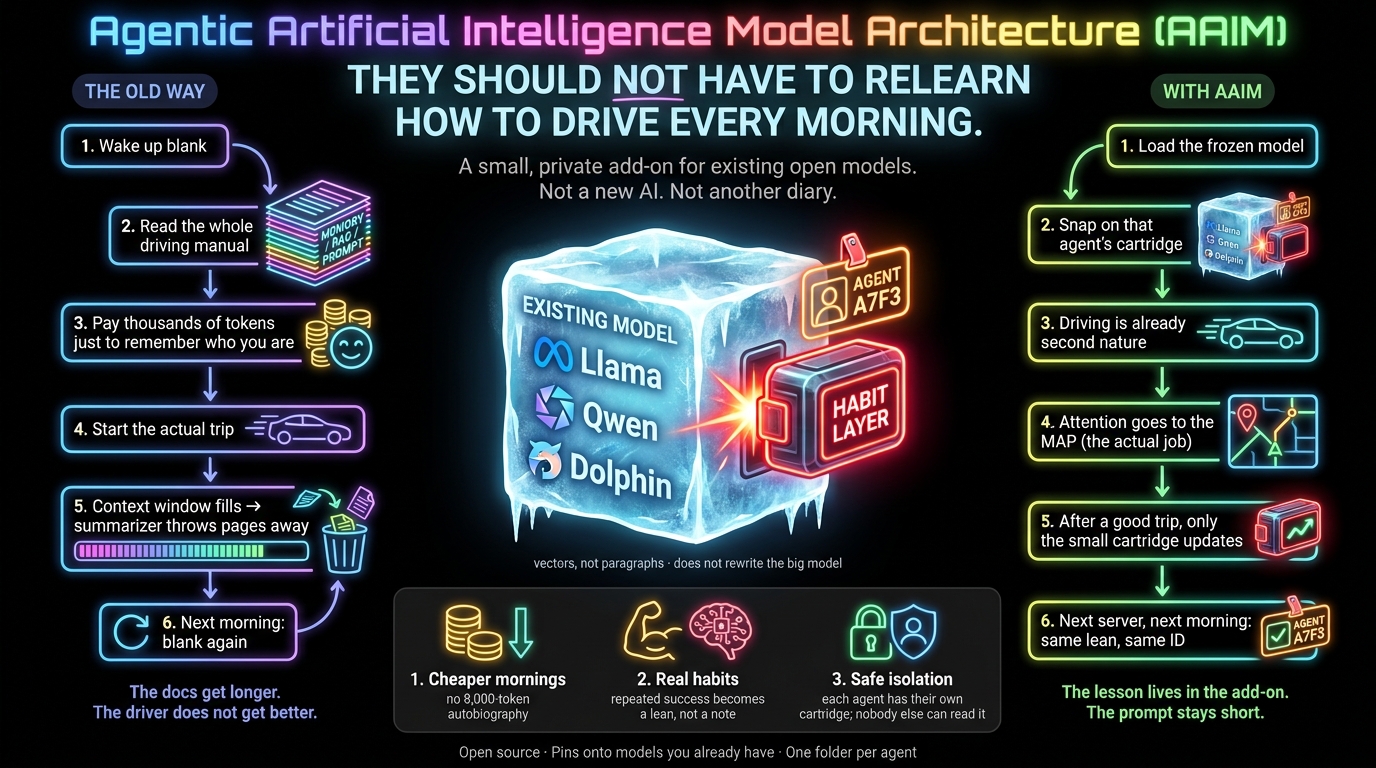
A skilled driver does not read the manual before every trip. Today’s agents do — every reboot. AAIM puts a clerk in front of any model — local or paid. Standing orders live in a habit table (one agent) and a trend table (the crew). A small meaning matcher pulls only the cards that match this job. The rest of the novel never enters the window. Skills and project memory stay for facts.
Keep the model you already run — local or paid. The clerk searches the crew catalog, then that agent’s catalog. Both layers are optional.
Hard hats, steel toes, walkie-talkies. Site rules everyone already follows. A human can write these once for the group.
Bricklayer, roofer, crane, tile, concrete. Each agent grows second nature for the seat they actually sit in.
Enough of the crew independently succeed. A gatekeeper checks it is a real win. Then the whole site already leans that way.
Once a rule is a habit or a trend, it leaves the everyday notes pile. The clerk attaches it only when this job matches. The window keeps the task, not the whole handbook.
Same meaning, different wording, still matches. “Grab this file” still finds “put downloads here.” The heavy model never reads the whole table.
One agent’s habit rows stay theirs. A trend only spreads past a threshold and a gate. Remove a row or an id. The frozen model never changed.
One agent id. Write a standing order once. The clerk attaches it only when this job matches — even if you word the ask differently.
Crew-wide cards in front. Human-seeded site rules — the hard hats — shared by every agent on that crew.
A card that keeps getting picked, across agents, can become a trend. A gatekeeper still says yes. Then the whole crew already has it.